

Futures trading, beyond basics, involves sophisticated techniques. CoinEx launched trial funds, aiding new traders, while managed strategies thrived in 2022’s volatile markets.
What are Advanced Futures Trading Strategies?
Advanced futures trading strategies transcend simple buy-and-hold approaches, employing complex analytical tools and techniques to capitalize on market inefficiencies. These strategies often involve statistical arbitrage, exploiting temporary price discrepancies across related markets, or utilizing sophisticated options strategies like straddles and strangles to profit from volatility.
They require a deep understanding of market dynamics, risk management, and potentially, algorithmic trading. The recent boom in managed futures during 2022, coinciding with falling stocks, bonds, and high oil prices, demonstrates their potential. CoinEx’s introduction of Futures Trial Funds highlights a growing accessibility to these techniques, allowing new traders to experience real-world trading without substantial initial capital. Mastering these strategies demands continuous learning and adaptation.
The Importance of a Trading Plan
A robust trading plan is paramount when implementing advanced futures strategies. It serves as a blueprint, outlining entry and exit rules, position sizing, risk tolerance, and capital allocation. Without a plan, even the most sophisticated strategy can lead to substantial losses. The plan should detail specific market conditions triggering trades, incorporating backtesting results and ongoing performance analysis.
Considering the complexities of strategies like statistical arbitrage or volatility trading, a well-defined plan mitigates emotional decision-making. CoinEx’s trial funds offer a safe environment to test plan effectiveness. Furthermore, the plan must be adaptable, acknowledging evolving market dynamics and incorporating lessons learned from both successful and unsuccessful trades. Consistent review and refinement are crucial for long-term success.
Trend Following Strategies
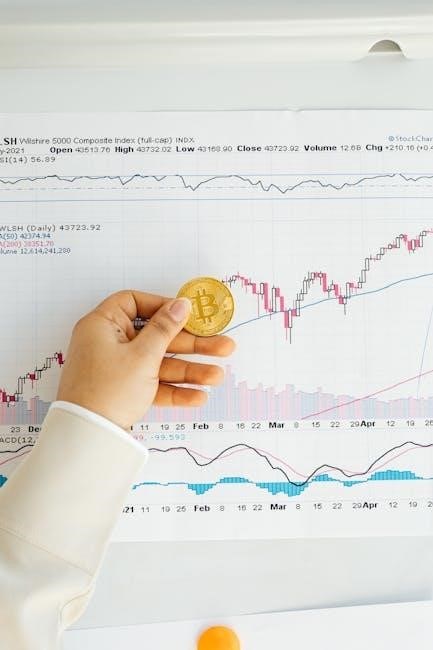
Trend following capitalizes on sustained price movements. Managed futures excelled during 2022’s declines, demonstrating the power of identifying and riding established trends effectively.
Moving Average Crossover Systems
Moving average crossover systems are foundational trend-following techniques. These strategies generate signals when a shorter-term moving average crosses above or below a longer-term moving average. A bullish signal occurs when the shorter average crosses above, suggesting upward momentum, while a bearish signal appears when it crosses below, indicating potential downside.
Optimizing these systems involves careful selection of moving average periods – balancing responsiveness with noise reduction. Traders often experiment with combinations like 9-day and 20-day, or 50-day and 200-day, depending on the futures contract and timeframe. Backtesting is crucial to assess historical performance and refine parameters. However, whipsaws – false signals in choppy markets – are a common challenge, necessitating the incorporation of filters or confirmation signals.
Donchian Channel Breakout
Donchian Channels define price volatility by plotting the highest high and lowest low over a specified period. Breakout strategies trigger trades when the price moves beyond the upper or lower channel boundary. A breakout above the upper channel suggests bullish momentum, initiating a long position, while a break below the lower channel signals bearishness, prompting a short trade.
Effectively utilizing Donchian Channels requires careful period selection – shorter periods yield more signals but increased whipsaws, while longer periods offer fewer, more reliable signals. Combining breakouts with volume confirmation can enhance signal accuracy, validating the strength of the move. Stop-loss orders are essential, typically placed just inside the channel, to limit potential losses from false breakouts.
Parabolic SAR Optimization
The Parabolic SAR (Stop and Reverse) is a trailing-stop indicator that identifies potential trend reversals. Optimization involves fine-tuning its parameters – the acceleration factor (typically 0.02) and the maximum acceleration factor (usually 0.2). Higher acceleration factors increase sensitivity, generating more signals but also more false ones. Lower values reduce sensitivity, potentially missing early trend changes.
Optimizing these parameters for specific futures contracts and timeframes is crucial. Backtesting across historical data helps determine the optimal settings that maximize profitability and minimize drawdowns. Combining Parabolic SAR with other indicators, like moving averages or volume, can filter out false signals and improve trading accuracy. Dynamic adjustment of parameters based on market volatility is also beneficial.
Mean Reversion Strategies
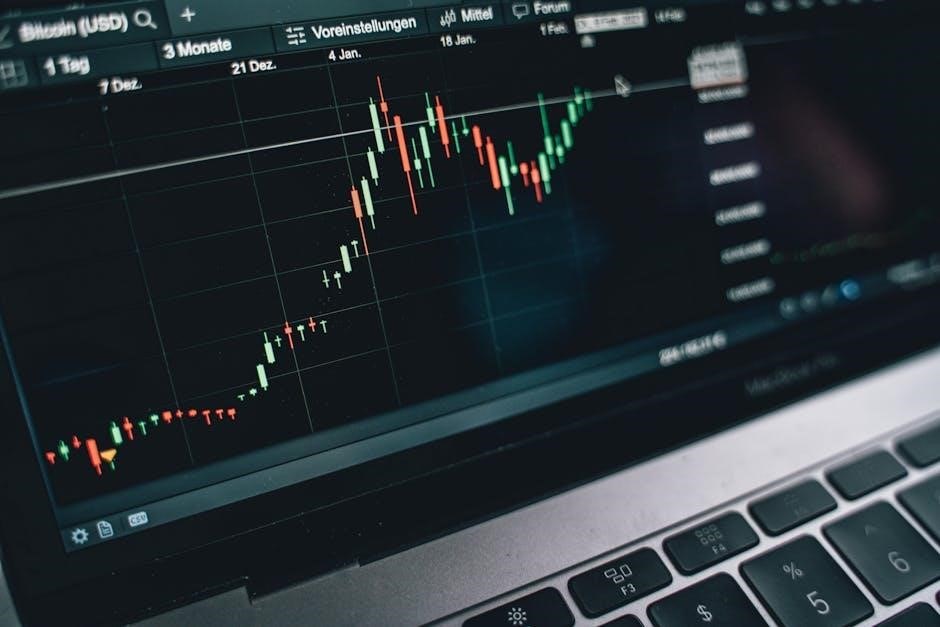
These capitalize on temporary price deviations, assuming prices will revert to their average. Strategies utilize oscillators like RSI and Stochastic to identify overbought/oversold conditions.
Bollinger Band Strategies
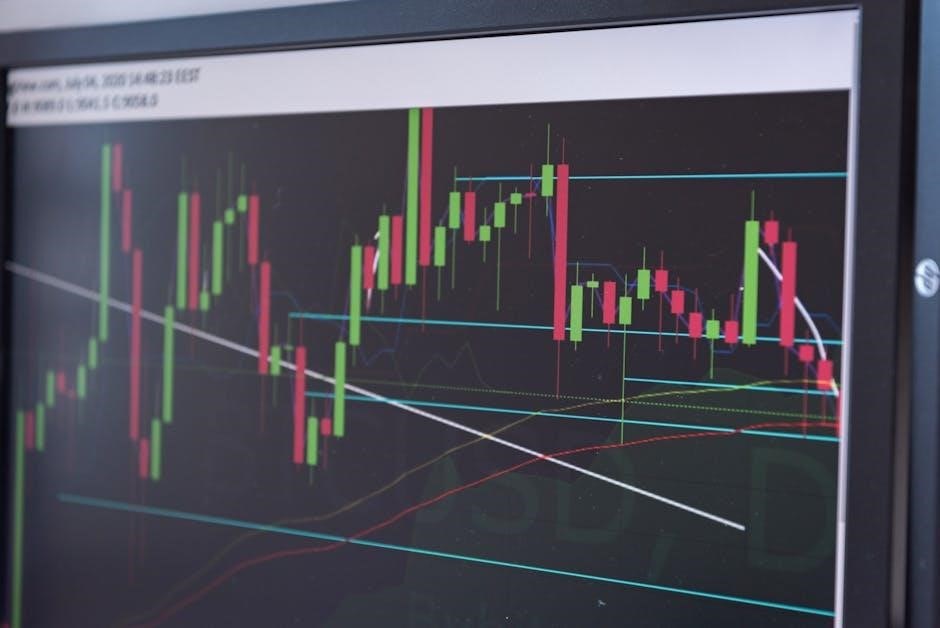
Bollinger Bands, created by John Bollinger, offer a dynamic approach to futures trading. They consist of a moving average with upper and lower bands plotted at standard deviations away. A core strategy involves identifying potential reversals when prices touch or breach these bands.
When the price touches the upper band, it suggests an overbought condition, potentially signaling a sell opportunity. Conversely, touching the lower band indicates an oversold condition, hinting at a possible buy. Traders often combine Bollinger Bands with other indicators, like RSI, to confirm signals. Band width also provides insights; narrowing bands suggest low volatility, while widening bands indicate increasing volatility.
Advanced traders explore strategies like the “Bollinger Squeeze,” anticipating breakouts after periods of low volatility. Careful parameter adjustments (moving average period and standard deviation) are crucial for optimal performance in different futures markets.
Relative Strength Index (RSI) Based Strategies
The Relative Strength Index (RSI) is a momentum oscillator measuring the magnitude of recent price changes to evaluate overbought or oversold conditions in futures markets. Typically, an RSI value above 70 suggests overbought conditions, potentially signaling a price decline, while a value below 30 indicates oversold conditions, hinting at a potential price increase.
Advanced strategies involve divergence – when price makes new highs, but RSI fails to confirm, suggesting weakening momentum and a possible reversal. Conversely, when price makes new lows, but RSI rises, it signals potential bullish divergence. Traders also utilize RSI to identify hidden divergences, offering earlier reversal signals.
Combining RSI with trend lines and chart patterns enhances signal accuracy. Parameter adjustments (period length) are vital for adapting to different futures contract characteristics and market volatility.
Stochastic Oscillator Strategies
The Stochastic Oscillator compares a security’s closing price to its price range over a given period, generating values between 0 and 100. Readings above 80 typically indicate overbought conditions, suggesting a potential sell signal, while readings below 20 suggest oversold conditions, hinting at a possible buy signal.
Advanced traders utilize crossovers – when the %K line crosses above the %D line, it’s a bullish signal, and vice versa. Divergences, similar to RSI, are crucial; bearish divergence occurs when price makes higher highs, but the Stochastic Oscillator makes lower highs. Fast and slow stochastic settings are adjusted for sensitivity.
Combining the Stochastic Oscillator with other indicators, like moving averages, improves signal reliability. Identifying support and resistance levels alongside stochastic signals enhances trading decisions.
Arbitrage Strategies
Exploiting price discrepancies across markets is key. Triangular arbitrage, calendar spreads, and inter-market spreads offer opportunities for risk-free profit generation.
Inter-Market Spread Arbitrage
Inter-market spread arbitrage capitalizes on temporary pricing inefficiencies between related futures contracts traded on different exchanges or in different markets. This strategy often involves identifying discrepancies between a commodity’s futures price in one location versus another, or between a futures contract and its underlying cash market price.
Successful execution requires rapid analysis and simultaneous trading across multiple markets. For example, a trader might buy a gold futures contract on the COMEX exchange while simultaneously selling a gold futures contract on the Shanghai Gold Exchange, profiting from the price difference after accounting for transaction costs and exchange rates.
The profitability of inter-market spread arbitrage is typically small per contract, necessitating high trading volumes and sophisticated automated trading systems to overcome latency and execution challenges.
Calendar Spread Arbitrage
Calendar spread arbitrage exploits price discrepancies between futures contracts for the same underlying asset but with different expiration dates. This strategy focuses on the time decay of futures contracts, anticipating that the price difference between near-term and distant-term contracts will converge as the expiration date approaches.
Traders simultaneously buy a futures contract with a later expiration date and sell a contract with an earlier expiration date, aiming to profit from the expected narrowing of the spread. Factors like storage costs, interest rates, and anticipated supply/demand shifts influence calendar spreads;
Successful calendar spread arbitrage requires careful analysis of carry costs and a precise understanding of market expectations. Automated systems are often employed to monitor spreads and execute trades efficiently.
Triangular Arbitrage in Futures
Triangular arbitrage in futures leverages price discrepancies across three related futures contracts. Unlike currency markets, this involves futures on assets with inherent relationships – for example, crude oil, gasoline, and heating oil, or different grades of the same commodity.
The strategy identifies mispricing where the implied exchange rate between the three contracts doesn’t align with market expectations. Traders simultaneously buy one contract, sell another, and sell the third, creating a risk-free profit from the convergence of prices.
Execution speed is crucial, as these opportunities are fleeting. Algorithmic trading systems are essential for identifying and exploiting these arbitrage possibilities before they disappear. Transaction costs and slippage must be carefully considered.
Volatility-Based Strategies
These strategies profit from anticipated price swings. Straddles and strangles utilize options, while VIX futures trading capitalizes on market fear gauges.
Straddle and Strangle Strategies
Straddles and strangles are non-directional volatility plays. A straddle involves buying a call and a put option with the same strike price and expiration date, profiting from significant price movement in either direction. Conversely, a strangle utilizes out-of-the-money call and put options, requiring a larger price swing to become profitable but costing less upfront.
These strategies benefit from increased implied volatility, as option prices rise with heightened uncertainty. Traders employ them when anticipating a substantial market move but are unsure of its direction. Careful consideration of implied volatility, time decay (theta), and potential maximum loss is crucial for successful implementation. Proper risk management, including setting profit targets and stop-loss orders, is paramount when utilizing these advanced techniques.
VIX Futures Trading
VIX futures offer a unique way to trade market volatility. Often called the “fear gauge,” the VIX reflects market expectations of near-term volatility. Trading VIX futures allows investors to speculate on, or hedge against, fluctuations in the VIX index itself, rather than underlying assets.
However, VIX futures exhibit contango (futures price higher than spot) or backwardation (futures price lower than spot), impacting returns. Contango can erode profits over time as contracts are rolled. Successful VIX futures trading requires understanding these dynamics, along with careful risk management due to the VIX’s inherent volatility and complex pricing structures. It’s a sophisticated strategy best suited for experienced traders.
Implied Volatility Analysis
Implied volatility (IV) is a crucial component of options and futures pricing. It represents the market’s expectation of future price swings, derived from option prices. Analyzing IV helps traders gauge potential price movements and identify potentially overvalued or undervalued options.
Comparing historical volatility to implied volatility reveals market sentiment. A widening gap suggests increased uncertainty, while a narrowing gap indicates decreasing expectations of volatility. Traders utilize IV to construct volatility-based strategies like straddles and strangles. Understanding the volatility smile – where out-of-the-money options have higher IV – is also essential for informed trading decisions. Accurate IV assessment is key to successful risk management.
Algorithmic Trading & Automation
Automated systems execute trades based on pre-defined rules. Backtesting and optimization are vital, alongside careful risk management, especially with high-frequency trading approaches.
Backtesting and Optimization
Rigorous backtesting is paramount before deploying any algorithmic futures strategy. This involves applying the strategy to historical data to assess its performance under various market conditions. Key metrics include profitability, drawdown, win rate, and Sharpe ratio. Optimization refines strategy parameters to maximize returns while managing risk. However, beware of overfitting – tailoring the strategy too closely to past data, leading to poor performance in live trading.
Robust optimization techniques employ walk-forward analysis, where the strategy is optimized on a portion of the historical data and then tested on an out-of-sample period. This provides a more realistic evaluation of its potential. Furthermore, consider transaction costs and slippage during backtesting to accurately reflect real-world trading conditions. Thorough backtesting and optimization significantly increase the probability of success with algorithmic futures trading.
High-Frequency Trading (HFT) Considerations
High-Frequency Trading (HFT) in futures demands ultra-low latency infrastructure and sophisticated algorithms. It exploits minuscule price discrepancies, requiring co-location of servers near exchange matching engines. HFT strategies often involve order book analysis, statistical arbitrage, and market making. However, HFT is highly competitive and requires substantial investment in technology and skilled personnel.
Regulatory scrutiny of HFT is increasing, focusing on fairness and market stability. Algorithmic safeguards are crucial to prevent “flash crashes” and unintended consequences. Risk management is paramount, as even minor errors can lead to significant losses. Furthermore, HFT firms must comply with strict reporting requirements and exchange rules. Entering the HFT space necessitates a deep understanding of market microstructure and advanced programming skills.
Risk Management in Algorithmic Trading
Robust risk management is paramount in algorithmic futures trading. Strategies must incorporate safeguards against unexpected market events and model failures. Position sizing, based on volatility and account equity, is crucial to limit potential losses. Stop-loss orders and circuit breakers should be implemented to automatically exit unfavorable trades.
Continuous monitoring of algorithm performance is essential, with alerts triggered by deviations from expected behavior. Backtesting and stress-testing should simulate various market scenarios to identify vulnerabilities. Diversification across multiple algorithms and futures contracts can reduce overall portfolio risk. Regular audits of code and infrastructure are vital to prevent errors and maintain system integrity. Effective risk management protects capital and ensures long-term profitability.
Advanced Order Types & Execution
Sophisticated orders like Iceberg, Stop-Limit, and TWAP enhance execution. These tools manage market impact, control price, and discreetly fill large orders efficiently.
Iceberg Orders
Iceberg orders are designed for institutional traders seeking to execute large orders without revealing their full intention to the market. They function by displaying only a portion of the total order quantity, similar to the visible tip of an iceberg. As that portion is filled, another portion is automatically released, continuing the process until the entire order is completed.
This strategy minimizes market impact, preventing significant price movements caused by a large, visible order. It’s particularly useful in less liquid futures contracts where a substantial order could easily distort the price. Iceberg orders help maintain anonymity and improve execution prices, especially for substantial positions. Traders can customize the displayed quantity, balancing visibility with execution speed.
Stop-Limit Orders
Stop-limit orders combine the features of stop and limit orders, offering a nuanced approach to trade execution. A stop price triggers the order, converting it into a limit order at a specified limit price. This differs from a stop-market order, which executes immediately at the best available price once triggered.
The primary benefit is price control; you avoid worst-case scenarios by setting a limit; However, there’s a risk the limit price may not be reached, resulting in non-execution, especially in fast-moving markets. Traders use them to protect profits or limit losses, but require careful price selection. Understanding market volatility is crucial when setting both the stop and limit prices effectively.
Time-Weighted Average Price (TWAP) Orders
TWAP orders aim to execute a large order over a specified period, minimizing market impact. Instead of placing a single large order, the system breaks it into smaller chunks, executing them at regular intervals until completion. This strategy averages the price over time, reducing the risk of significant adverse price movements.
TWAP orders are particularly useful for institutional investors or traders with substantial positions. They’re less susceptible to front-running and offer a more predictable execution price than market orders. However, they aren’t ideal for rapidly changing markets, as the average price may be unfavorable. Careful consideration of the execution timeframe is essential.

Risk Management Techniques
Effective risk control is paramount. Diversification, position sizing (like the Kelly Criterion), and strategic hedging are crucial for protecting futures portfolios from losses.
Position Sizing and Kelly Criterion
Determining appropriate position size is fundamental to risk management in futures trading. The Kelly Criterion offers a mathematical approach, aiming to maximize long-term growth by wagering a fraction of capital proportional to the edge. However, full Kelly can be aggressive; therefore, fractional Kelly is often preferred.
This involves calculating the optimal percentage of your trading capital to risk on each trade, based on the probability of winning and the win/loss ratio. Conservative traders often utilize half or quarter Kelly to reduce volatility. Proper position sizing prevents substantial losses from single trades, safeguarding capital and enabling continued participation in the market. Ignoring position size can quickly deplete an account, even with a winning strategy.
Diversification Across Futures Contracts
Diversification minimizes risk by spreading capital across uncorrelated futures markets. Unlike stock portfolios, futures offer access to commodities, currencies, and interest rates, providing broader diversification opportunities. Correlation analysis is crucial; avoid over-exposure to highly correlated contracts, as they won’t offer significant risk reduction.
A well-diversified portfolio might include energy futures (oil, natural gas), agricultural futures (corn, soybeans), and financial futures (Treasury bonds, currencies). Managed futures strategies often employ diversification to navigate varying market conditions. This approach aims to reduce the impact of adverse movements in any single market, enhancing portfolio stability and potentially improving risk-adjusted returns.
Hedging Strategies for Futures Portfolios
Hedging utilizes futures to offset potential losses in existing asset holdings. For example, a farmer can hedge against falling crop prices by selling futures contracts. Similarly, an airline can hedge against rising fuel costs by buying crude oil futures. Effective hedging requires careful consideration of basis risk – the difference between the futures price and the spot price.
Portfolio hedging involves using futures to protect against broad market declines. Selling index futures can provide downside protection for a stock portfolio. Managed futures strategies frequently incorporate hedging techniques to mitigate risk during turbulent periods. Dynamic hedging adjusts the hedge ratio based on market conditions, optimizing protection while minimizing costs.
Resources for Further Learning
Explore recommended books, websites, and simulators for deeper knowledge. Online courses and communities offer valuable insights into advanced futures trading techniques and strategies.
Recommended Books and Websites
Delving into advanced futures trading requires dedicated study. Several resources can significantly enhance your understanding. For foundational knowledge, explore books covering technical analysis, risk management, and specific futures markets. Websites like Investopedia and BabyPips offer comprehensive educational materials, including articles and tutorials on futures contracts and trading strategies.
Seeking specialized insights? Consider resources focusing on algorithmic trading, volatility analysis, and arbitrage techniques. Reputable financial news sources, such as Bloomberg and Reuters, provide real-time market data and expert commentary. Furthermore, explore websites dedicated to futures trading communities, where experienced traders share their knowledge and insights. Remember to critically evaluate information and cross-reference sources for accuracy.
Futures Trading Simulators
Mastering advanced strategies demands practical application without risking capital. Futures trading simulators provide a risk-free environment to test and refine your techniques. These platforms replicate real-market conditions, allowing you to execute trades using virtual funds. Popular simulators include TradingView, NinjaTrader, and MetaTrader, offering historical data and charting tools.
Utilize simulators to backtest your strategies, optimize parameters, and assess their performance under various market scenarios. Experiment with different order types, position sizing techniques, and risk management rules. Remember that simulator results are not guarantees of future profitability, but they offer invaluable experience and confidence before deploying real capital. Consistent practice is key to success.
Online Courses and Communities
Continuous learning is crucial in the dynamic world of futures trading. Numerous online courses cater to advanced strategies, offering structured education from experienced traders. Platforms like Udemy, Coursera, and Investopedia provide comprehensive modules covering technical analysis, risk management, and algorithmic trading.
Engage with online communities and forums – such as Elite Trader and BabyPips – to exchange ideas, discuss market trends, and learn from peers. These platforms foster collaborative learning and provide valuable insights. Networking with other traders can accelerate your understanding and refine your approach. Remember to critically evaluate information and prioritize reputable sources.